12 Days Before Christmas Series: #7 – 3 minute read time
Read: Luke 2:1-21
I can imagine a conversation between Mary and Joseph that ends like this: “Wait, WHAT? You want me to put baby Jesus in a food trough?!?! Do you think he was born in a barn?” It probably didn’t happen that way, but it’s fun to imagine.
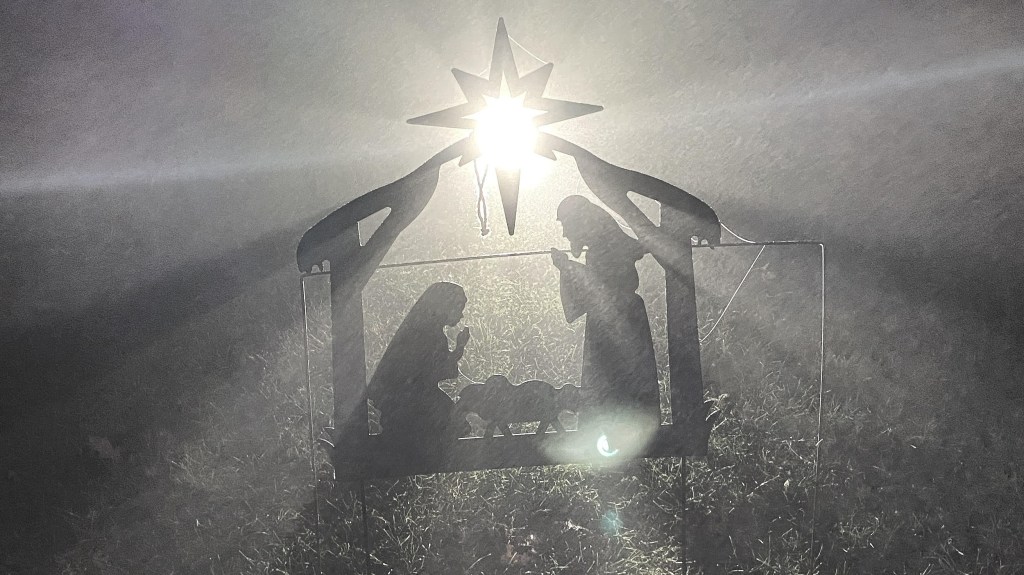
We have a lot of imaginative ideas about where Jesus was born. Was it stable? Was it a cave? There’s a lot riding on the answer. We have nativity scenes to display. We have stage sets to design and build for the annual Christmas play. We have songs to write that paint the pastoral picture.
It might surprise you to know that the bible has very little to say about the setting. Yes, he was born in Bethlehem. And yes, at some point Jesus was laid in some kind of box where you would normally put animal food. Everything else that you see in front yard inflatables, on living room display tables, under the tree, or at the local church’s live nativity is from someone’s imagination.
There was no local Holiday Inn, there was no innkeeper. When Luke wrote, “there was no place for them in the inn” he was talking about a very different kind of place. The Greek word translated as ‘inn’ is katalyma and it’s only used three times in the New Testament (the last half of the bible). The other two places this word is used (Mark 14:14; Luke 22:11) is when Jesus sent his disciples to find a guest room where he could celebrate the Passover meal with them – the guest room or Upper Room.
There was no room in the guest room on the night Jesus was born. This makes sense because several members of Joseph’s clan (along with other descendants of David) had arrived at Bethlehem for the census. This ‘little town’ had suddenly become very busy. And after Jesus was born, the quietest place to lay him down for a nap was probably where they kept and fed the animals. Animals don’t talk as much as a room full of relatives who haven’t seen each other in a long time!
A food trough for lambs in Bethlehem (which literally means “house of bread”) is the most appropriate place to lay the child who was born to be the Bread of Life. The Shepherds (see their blog) would gather to worship him in the most appropriate place for those who tend and feed the sheep.
Flash forward to thirty-three years later when the Bread of Life would be looking for another katalyma. There he would gather his disciples (the ones who would soon shepherd the infant church). There in the upper (guest) room the Bread of Life would break the bread of the Passover Seder. (Luke 22:19-20) The next day he would become the Passover Lamb “who takes away the sin of the world.” (John 1:29)
Over the centuries, our imaginations have fabricated the inn, the innkeeper, the stable (or cave, or barn), the drummer boy, and more. But when we look at what really happened, the picture is so much richer with meaning.
The Bread of Life was born in the house of bread and took naps in a lambs’ feeding trough surrounded by shepherds. The Good Shepherd who broke the Passover bread became the Passover lamb, now invites us to come and dine. (John 21:12)
If you’d like to read the whole Christmas story as it unfolded more than 2,000 years ago, check the first blog in this series for a list of scriptures. If you have questions, feel free to reach out—I’ll do my best to answer.
Return tomorrow for: The Wise Men from Enemy Territory





Leave a Reply