
American Christians have been shaped by growing up in the most successful form of representative democracy – a constitutional republic. We’ve been nurtured by the idea that we all get a say on how things are done. Yes, the Constitution constrains us, but it can be amended. On one end of the political spectrum are those who wish that the U.S. Constitution would be frequently and more radically amended. On the other end of the spectrum is the belief that every law should, in most cases, conform to the original intent of the original framers. Everyone on that continuum believes that some of the law should change at least some of the time. Democracy, whether in its pure form or constrained by a constitutional republic, has shaped our worldview. Naturally, we carry that mindset into the church. But the church is NOT a democracy.
Whether we govern ourselves with cardinals, bishops, priests, and deacons, or with coordinating councils, lay ministers, and the priesthood of all believers, most believe that some conglomeration of “we” can alter the appropriate, and approved, behavior of believers. A recent article reports that Pope Leo XIV is considering changing the date of Easter so that it is commonly celebrated across denominations. That’s probably a good thing, but why has the church recognized differing dates for Easter for nearly 1800 years? How did we get to the point of determining for ourselves the standards and parameters by which we worship God?
It hasn’t always been so. When Yahweh God rescued the children of Israel from a lifestyle of slavery, He very clearly instructed Moses how He was to be worshiped. “According to all that I am showing you — the pattern of the tabernacle and the pattern of all its furnishings — you must make it exactly so.” (Exodus 25:9 NET)
You must overlay the ark with pure gold (Exodus 25:11). You must make holy garments for Aaron (Exodus 28:2). You must not offer strange incense, and you must pour out a drink offering (Exodus 30:9). You must not apply my sacred anointing oil to people’s bodies (Exodus 30:32). You must keep my Sabbaths (Exodus 31:13,14).
But we frequently chafe at commands and standards.
The human impulse to determine for ourselves what is right and wrong was quickly revealed only three chapters into Genesis. And according to Jesus, the hardness of the human heart is why Moses allowed a modification in the law regarding divorce. But, He added, “from the beginning it was not so” (Matthew 19:8). God’s standards are higher than what the law allows. The human heart is bent toward self-determination.
As a result, acceptable and proper behavior is usually established by consensus. We cherish autonomy above all else. We have democratized the church to the best of our ability. But the church is NOT a democracy. We have a King.
Sometimes, reformers pull us back from the democratic precipice. Poets and hymn-writers cry out, “No earthly master do we know, to man-rule will not bow/But to each other and to God eternal trueness vow.”[1] But eventually we go the way of Adam and Eve, and echo the crafty one, “Did God actually say …?” (Genesis 3:1). We forget that the church is NOT a democracy. We serve a King. He has transferred us into His kingdom (Colossians 1:13). All authority in heaven and on earth is in His hands (Matthew 28:18).
And even in the infant church, when it is challenged with something new (the Gentiles being added to the body of Christ), the solid ground they stand on is the Word of God and the guidance of the Holy Spirit (Acts 15:12-29). The church is NOT a democracy. We have a King.
Our Founding Fathers were understandably opposed to a pure democracy. Many were longing for a day when the nation being birthed in the United States would soon have many siblings around the world. Samuel Adams was one of them. We would do well to listen to his thoughts.
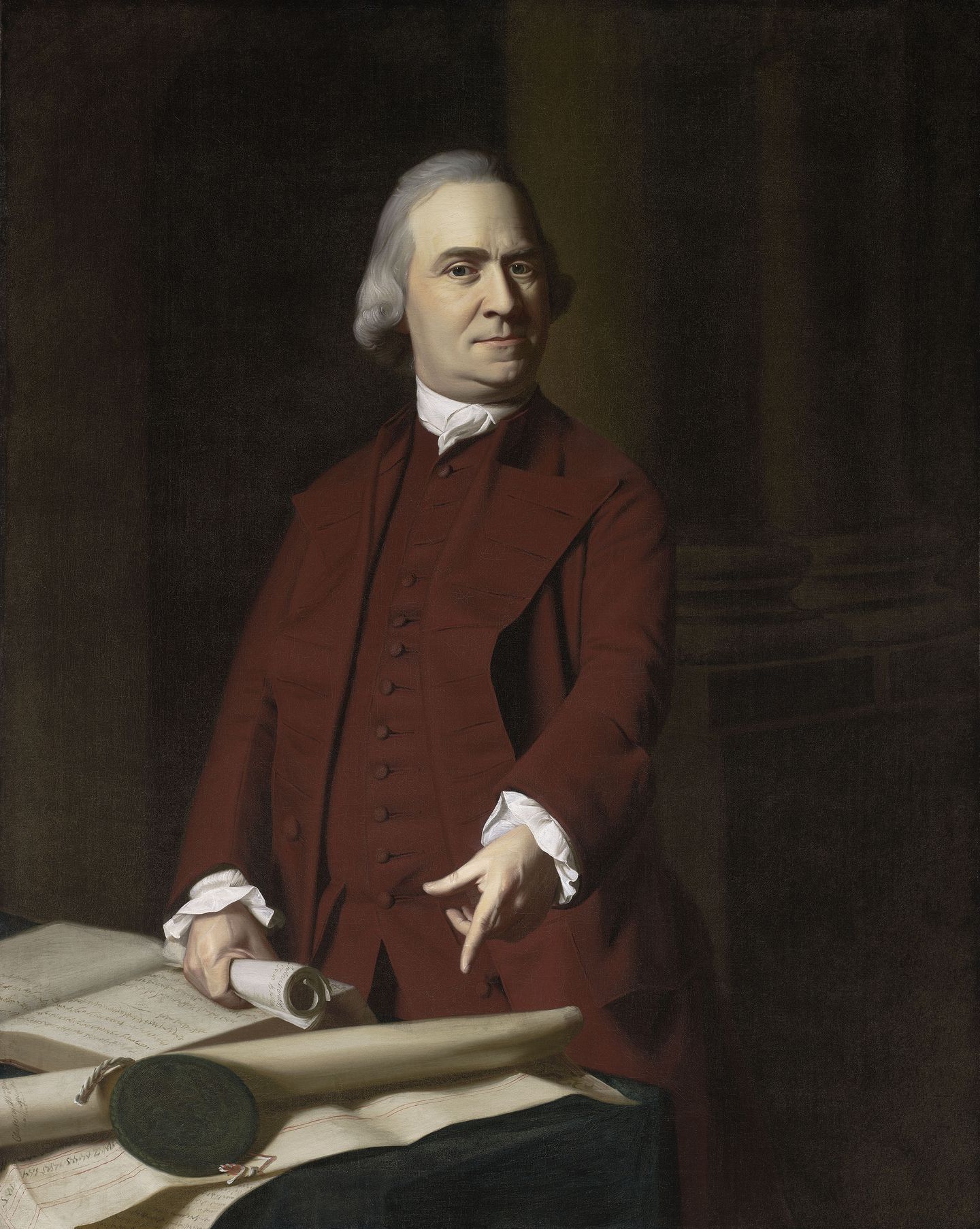
“…We cannot better express ourselves than by humbly supplicating the Supreme Ruler of the world… that the confusions that are and have been among the nations may be overruled by the promoting and speedily bringing in the holy and happy period when the kingdoms of our Lord and Savior Jesus Christ may be everywhere established, and the people willingly bow to the scepter of Him who is the Prince of Peace.”[2]
“We have this day restored the Sovereign to Whom alone men ought to be obedient. He reigns in heaven and… from the rising to the setting sun, may His kingdom come.”[3]
The church is NOT a democracy. We have a King. The Word of the King and the guidance of the Holy Spirit must be our foundation. May His will be done on earth, and in the church, as it is in heaven.
[1] “The Church’s Jubilee”, Public Domain. 1923 by Charles W. Naylor and Andrew L. Byers
[2] “A Fast Day Proclamation”, Massachusetts, March 20, 1797, Samual Adams
[3] “American Independence”, August 1, 1776, Samual Adams



 curtferrell.com
Leave a comment